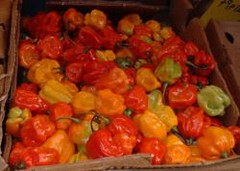
We like spicy food, we do, and we eat it quite often – all kinds – thai, indian, korean, mexican, caribbean, colombian, and yes, it almost always does painful and weird things to our lower digestive tracts as well. We read that the active ingredient in hot peppers, capsaicin, (from the latin name for the fruit – yes fruit – capsicum) releases endorphins when ingested so the painful, mouth-on-fire feelings you get are offset by a sense of pleasure, all of which is peculiarly masochistic. Indeed, a recent MSN (ugh) online article with facts from well-known UK supermarket chain TESCO tells us that,
“If you can stand the heat, then chili peppers contain an anti-inflammatory substance called capsaicin and has been linked with pain relief associated with conditions such as arthritis. Chilies are also thought to protect your heart, fight infection thanks to large amounts of vitamins A and C.”
We also know that certain peppers are more or less friendly than others – jalapenos (nice and friendly), serranos (slightly more firey but mostly fine), cayennes (pretty darn spicy, be careful), habaneros (exceedingly spicy, use carefully and sparingly), and because of that we’ve read a lot (okay some) about how to handle the spiciest of peppers (latex gloves; no contact with eyes, mouth, soft organs etc.; remove seeds and ribs to reduce spicyness), all of which we practice more or less to the letter of the law. However, the answer to the thorny issue of being able to tell just how spicy a particular pepper is has remained elusive
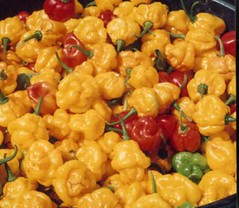 Culinary giant Jacques Pepin always tastes a little bit of his peppers before cooking with them so he knows how hot they are, but is that always a good idea? We recently bought some Jamaican Hot Peppers, aka scotch bonnet peppers, which are similar in strength to habaneros. Some people say the jamaican ones are fruitier than the habanero but I can’t tell much of a difference, they’re both dangerously hot to me. Anyway, my wife used half of one of these in a vietnamese noodle dish she made the other night and turned out very deliciously, and I used the other half to add a little (and use the word little by way of understatement) piquancy to an onion gravy I made to accompany some veal sausages and gorgonzola polenta I made the other day. I did not taste the pepper beforehand to judge its power and so found out when we were eating that its flavor was a serious component of the dish. That said, the heat wasn’t over-powering and searing, it was quite subtle and gave the gravy a very enjoyably warm after-taste.
So, now that we know these peppers are of the militant variety, and that they should be used sparingly, what do we do with the other 12 peppers in the package before they go mouldy? Your suggestions are welcome but I’ll need them soon!
Check out some of our other food commentary articles!
Here’s one idea, from a piece I wrote about my friend Chef Jim and his pepper garden:
Ellen gathers a range of hot and sweet peppers of as many colors as she can find, then slices them into pieces about 2 inches long. She makes a single layer in a roasting pan, then pours olive oil over all until the bottoms of the peppers are covered.
“It may seem like a lot,” she said, “but you can continue to use the oil for all of the peppers you are preparing.”
Strew chopped thyme and chopped onion over the peppers and place the pan under the broiler, not too close to the heating element. When they start to blacken, turn the peppers and broil until they’re fork-tender. Pull them and start the next batch.
“I usually work on two pans simultaneously, so there’s always another one waiting to go under the broiler,” she said.
When she’s done, she saves the oil and uses it to flavor sautes.
The whole piece is Mr. Hot Chile Pepper Man, found at http://eatingoutinharrisburg.wordpress.com/writing/
Thanks so much for this. We love eatingoutinharrisburg.wordpress.com! Thanks for this tip. I bet you we’ll need an eye-dropper to produce the perfect amount of heat in a dish with this oil! Thanks again. – amy and jonathan
What to do with peppers?… I just returned from a trip to the Hope Bay area of Jamaica. While I was there a good friend and a couple of very cordial neighbors got together and gathered some of these peppers for us; red, green and yellow. They very carefully sliced them, using a fork & knife so as not to touch them with fingers! Then carefully arranged them in a glass jar along with sliced fresh carrots, onions, cho cho and pimento seed (this is what the locals call the seeds off of the allspice tree). Then filled the jar (seeds & all by the way) with distilled white vinegar and added a little sugar. These will keep for a very long time like this and can be removed and used in dishes or you can use the liquid in sauces etc… or just pull one out & eat it every now and then when you want to torture yourself.
My wife Anna and I went to a “pick your own” in New Jersey where we live. We came upon this giant field of peppers we had never seen. We noticed quite a few Jamaican women in the field picking their own so we figured what the heck. As we did not see any other type of pepper near by we picked 10 pounds of them. Eventually we wandered far enough and found a whole host of other peppers for picking such as cayenne and cherry peppers which we also added to our big bag of peppers. Once our giant bag was filled we paid and took them all home. The only method we could agree on was pickling and so we did. I proceeded to wash and slice all but the cayenne which I wanted to leave whole because they were very long and would look cool in the jars. I did all of this with my bare hands. That was a tragic mistake as my hands burned continuously for 3 days. Nothing helped, only bourbon with which to drown my sorrow. I will be wearing rubber gloves next time. The pickling is easy, 2 parts vinegar to 1 part water, plenty of garlic, salt, pickling spices and sugar. Let them rest once pickled for about 2 weeks and they will mellow slightly. We eat them straight out of the jar with almost every meal now. So deliciously spicy. At first they seemed way too hot but you quickly get used to that which I find amazing. My wife could never tolerate spicy food and now Jalapenos and the like seem boringly bland. Eating them consistently this way also lowers your cholesterol, regulates blood pressure and will keep things moving along very nicely of you know what I mean. Top a cracker with goat cheese and a few slices of these babies, perfect!
We have done just that this past summer – we had an incredible amount of scotch bonnets and we pickled them. The vinegar is FIRE HOT! Thanks for the comment!